
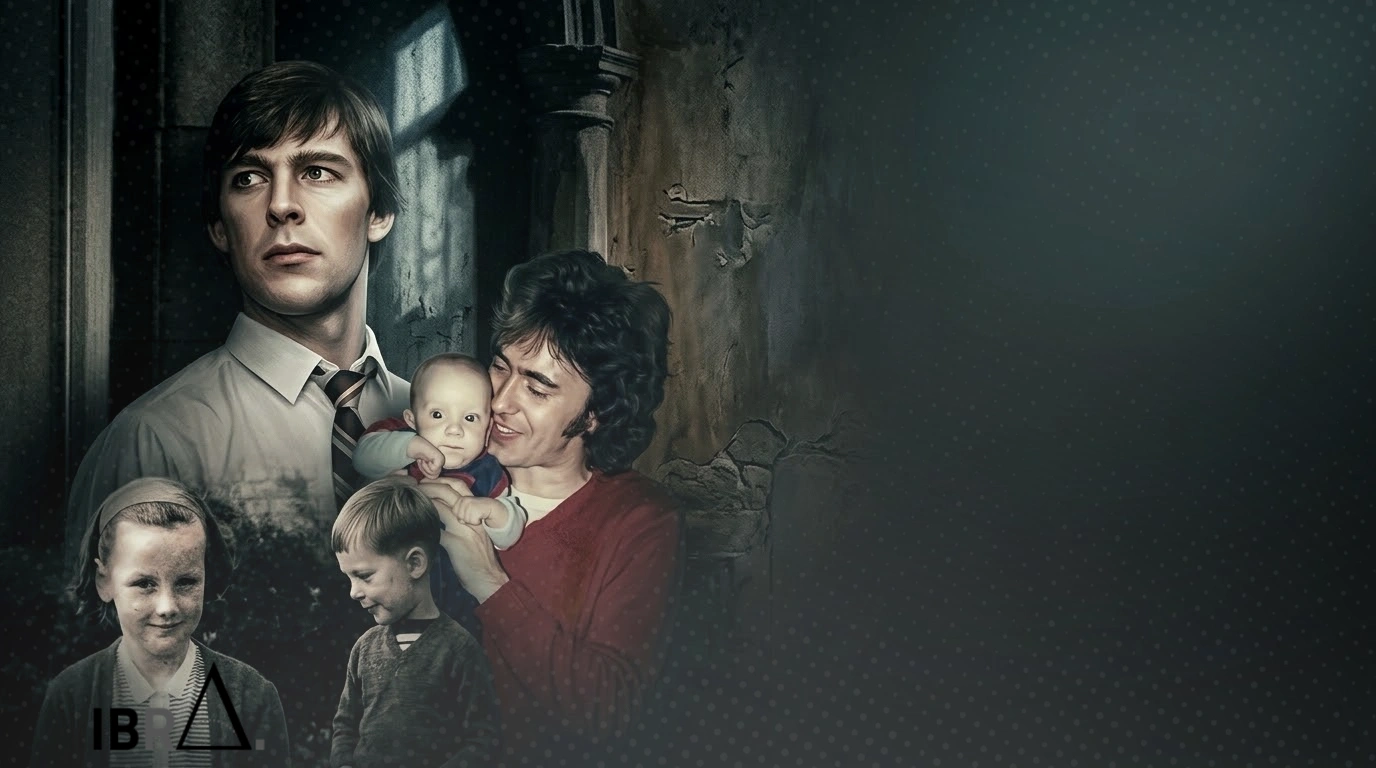
I thought I knew what isolation felt like until I read about Jeremy Ampers in 1985.
He shot his wife Shila and their twin children before taking his own life. The farm was old, the land wide — but no amount of space could hold what he carried inside him. It wasn't just a tragedy; it was a failure to speak when silence became louder than pain.

The Ampers family moved there after the birth of Jeremy and his twins. They inherited the place from generations before them — and with that came rules, strict ones wrapped in prayers. Joan Ampers bore this as if it were her own skin. Her husband Nfell tried to hold things together on a farm that had no connection to the rest of the world.
Jeremy didn't get help when he started bullying classmates. He didn't talk about his fear of insects or how anger would come out of nowhere — because in their world, mental health was weakness you buried under scripture and hard work. His sister Shila found out later Nfell had cheated on Joan five months after the twins were born but by then it didn't matter.
By 1983, Shila became Jeremy's wife. She got paranoid schizophrenia and started treatment at a local facility that same year. But her mother died in '83 too — and their faith kept them from asking for more help than what was written in books they'd never questioned.
Jeremy left school after bullying. He found work at a private school, but it didn't fix the cracks forming inside him. He started demanding money he couldn't explain. Shila began hallucinating about Nfell's infidelity — and that made things worse. The farm wasn't an escape from anything: not distance, resources or time.
Then came the night in '85. Jeremy left his gun at home but called his brother to warn him what he was going to do. But by then it was too late — or maybe not enough. He shot Shila eight times in the kitchen, seven bullets hitting her face before moving on to their children. And when it was over, he took a final bullet for himself.
The police arrived later but didn't find blood at first. There was no fresh evidence like you see today — just one spot on the gun and nothing else. It confused them until they realized what had happened: someone had killed everyone in that house before walking into his own death as if it were inevitable.

Jeremy's sister Julia reported him after seeing how unstable he'd become, but by then damage was done. The case remains complex — some still wonder whether faith played a role beyond the paper trail. Did their belief keep them from seeking help when they needed it most? Or did it just make things worse?
The tragedy at White House Farm isn't about one person alone — it's how isolation and tradition can create the perfect storm for mental health to be ignored until too late. Jeremy had moments of clarity but never found a way out that didn't involve violence or silence.
I've worked with people who struggled in similar ways before — not all ended up like this, sure — but I know how quickly things can spiral when help isn't available. The Ampers family lived far from the kind of support modern mental health systems offer and they paid for it in blood.
The farm still stands today as a relic of what was once ruled by faith over fear. But it also stands as a warning: not just to people with similar struggles, but to anyone who thinks tradition alone can solve problems that need more than prayers and rules.
Jeremy's story is one I've read before — in the way mental health cases are handled too often quietly. Too many times we let faith become a shield instead of a bridge. This isn't about condemning religion; it's recognizing when belief becomes a barrier rather than an answer.
The farm still exists on maps and in local memory, but what happened inside that house won't be forgotten easily. It wasn't just the violence — it was everything that led to it: isolation, silence, faith as both comfort and curse.
Some might say this is a cautionary tale for how mental health should never be ignored — but I think they're missing something deeper. The Ampers family didn't need more words; they needed action when those words weren't enough. They needed to see that being broken doesn't mean you're wrong in your beliefs — just that you might not have the tools to handle it.
The farm still stands, and so does its story. But what I keep thinking is how many other families like them exist out there, maybe with different names but same struggles, waiting for someone to listen before it's too late.