
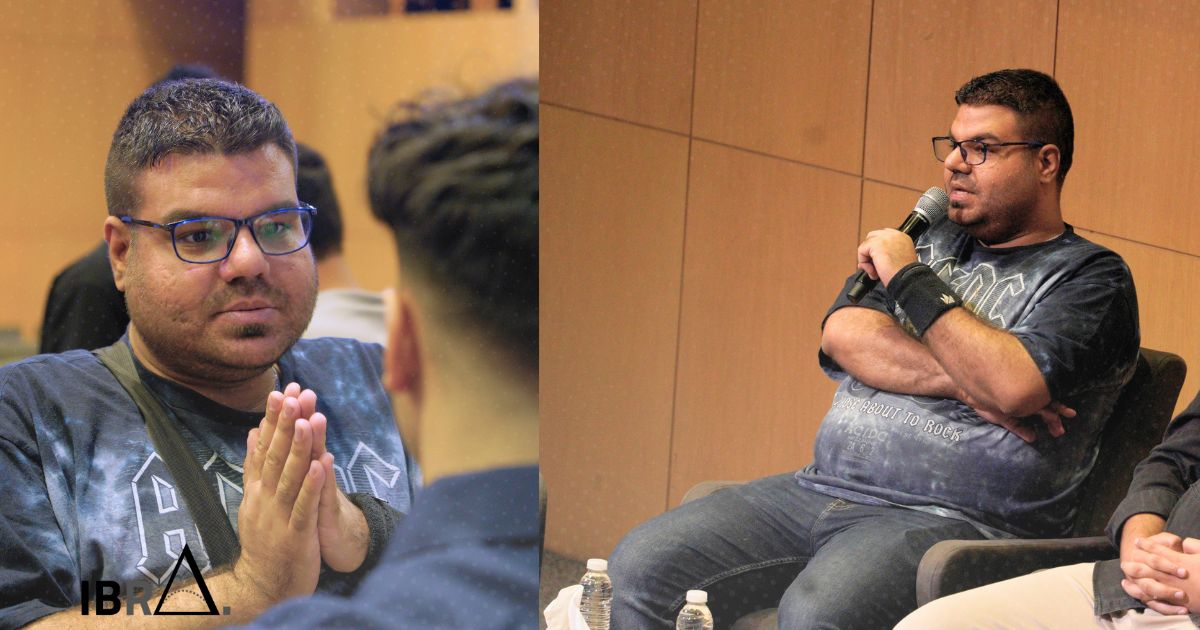
I assumed passion was the scarce resource in Iraqi game development. Saif Al-Dabbagh, 32, answered my 21 written questions and put money first. His hobbies run from anime to games to tech, and esports is the passion he kept up whether it paid or not. I was wrong about what limits people who love this field. This piece covers his answers on money, engines, learning, and what he says passion costs.
Saif Treats Esports as a Cause, Not a Paycheck
Yet he names money as the biggest obstacle.
Saif says he stayed in esports whether the work earned money or not. He calls it charity work: giving advice and benefit to others. His position, in his words: “Not everything in life is money.” He counts the success of a gaming community, and the joy it gives him and others, as his greatest achievement.
He Ranked Money Ahead of Community and the World
Industry exists; income is thin.
Saif rates Iraq’s game industry as small but not nonexistent. Profit is modest enough that few programmers can treat the field as a livelihood, he says. That thins the ranks of programmers and makes the field hard to choose.
Asked for the biggest challenge, he gave an order. First comes a developer’s own financial support, then the community, then global backing last. With money behind him, he says, a developer can make the game in an easier, faster, better way. Luck can help too: a company or publisher might buy a project halfway through.
Competing on the world stage is hard, he says, not impossible. He trusts some Iraqi developers who carry buried potential, and he salutes them. Local support is far off, and government support is the farthest. Private backing could happen but needs time and persuasion. He adds that the technical side of the field does not exist in Iraq, and where it does, it comes with a price.
Unreal Brings a Professional’s Pressure
Bigger engines punish bigger mistakes.
Saif calls Unity the best-known engine, with Godot or even Scratch as options for beginners. A developer who reaches Unreal Engine, he says, has reached the professional stage and can build 3D games at a higher level. That level brings more pressure on accuracy, graphics, story and movement. Every mistake draws blame. A small flaw in a 2D game draws less attention, he says, because 3D productions spend more money.
Polish and AI Checks Decide the Final Game
The last stage is the hardest one.
Saif names final processing as the hardest stage of making a game. English calls it polishing, and he translates it as final shine. The Battlefield 6 beta shipped full of glitches. Developers fixed them afterward.
Polishing works like sanding a table before sale. The frame stands without it, but every rough edge shows.
On AI, he says two mouse clicks can now finish a level or a whole chapter. It eases the work, but the output still needs tuning with the right inputs and a checking stage. He names one technical skill above the rest: linking graphics and sounds inside the engine. Done well, it makes the game smooth and comfortable for players, which is what wins an audience.
Learning Starts in School and Never Stops
Practice matters more than the source.
Saif sets no minimum age for learning. To build a generation that understands the field, he would start in intermediate school, about grades 7 and 8. Primary teachers, he says, would find the task too hard.
Sources are free, he says: the internet is open to everyone, YouTube teaches a lot, and AI adds more. If a learner never practices or invents anything, everything learned is wasted. Personal projects don’t have to outrank certificates, he says, but success can come either way. Some situations will still push a developer back to study for the certificate, which becomes a weapon and fills a gap.
For real experience he points to global sites that offer internships, online or in person. Online is better, he says, if the intern understands what he is doing, and a local opportunity is a plus.
Reaching the World Runs Through Relationships
Think local first, then region, then world.
Before founding a studio, Saif says, a developer should check whether he is qualified to lead a team. He also needs the right person beside him to back the project.
Reaching the world comes from relationships and time, he says. Companies have scouts, and some of their people are Arab or Iraqi. He calls the internet a blessing, not a curse, because it connects everyone. His route is local first, then the Middle East, then the world, climbing through relationships in logical steps.
He doesn’t call the future promising because of the lack of support, but he is optimistic. He feels pride when a game ends up in an Iraqi maker’s hands, and he takes pride in a country’s own product when he talks with companies.
Passion Still Has to Pay for Itself
His advice puts a limit on devotion.
Passion carries a bill, and Saif itemizes it. The work demands effort, thinking, time and high energy. Profit stays modest. His advice is to keep the passion alive but not pour all effort, energy and money into a project that won’t earn anything for the future. Balance, he says, means weighing life and its gains against the passion a person won’t give up.
I now ask what a plan costs a person each month before I ask what it earns. These are written answers to 21 questions, not a meeting, so I can’t hear his tone on any of them. Passion is free; everything around it costs money.